
BORING BETS, BETTER ODDS
The casino’s dullest-sounding wagers can be your bankroll’s best friends – while those flashy names can cost you big
By Frank Scoblete
 For some odd reason, the best bets in the casino often have the most boring-sounding names. Pass Line. Bank. Odds. Basic Strategy. None exactly scream excitement. But that’s often the point: when you look past the name and at the math, these boring bets can be among the friendliest wagers on the casino floor.
Take baccarat. The boring-sounding Banker bet carries a 1.06 percent house edge under standard rules, while the Player bet comes in at 1.24 percent. The Tie bet, with its much more exciting promise of a big payoff, carries a whopping 14.36 percent house edge at the usual 8-to-1 payout.
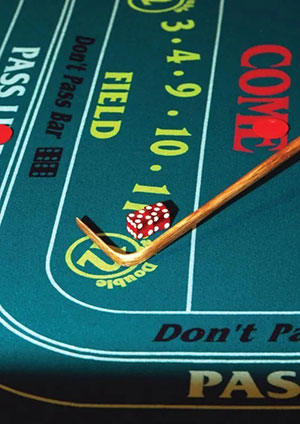
Craps offers another lesson in boring-but-good betting. The Pass Line and Come bets each have a 1.41 percent house edge, while the Don’t Pass and Don’t Come bets are slightly better at 1.36 percent under standard rules. And then there are the Odds bets, which have no house edge at all. The catch, of course, is that you can make an Odds bet only after establishing the appropriate Pass Line, Don’t Pass, Come or Don’t Come wager.
Sic Bo has its own pair of deceptively dull wagers: Big and Small. They’re hardly the stuff of casino marketing slogans, but they carry a much lower house edge than many of the game’s flashier propositions.
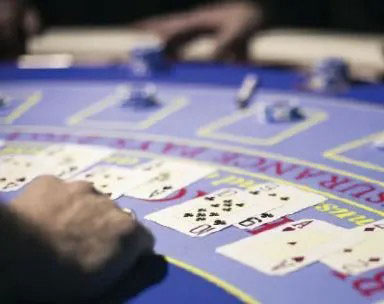
Check out blackjack. One of the biggest breakthroughs in the game was the development of basic strategy—a mathematically derived set of rules telling players the best decision to make for every possible combination of their cards and the dealer’s upcard.
 Unfortunately, “basic strategy” sounds about as exciting as a tax seminar.
Then there’s “card counting,” arguably one of the most famous strategic concepts in casino gambling. It sounds like something you’d do while organizing your sock drawer. The other basic blackjack vocabulary isn’t exactly thrilling, either: stand, hit, split and double down.
Yet knowing when to stand, hit, split and double down—and following basic strategy—can make blackjack one of the lowest-house-edge games in the casino. Depending on the rules and number of decks, the house edge for a basic-strategy player can be around one- half percent or even lower. That’s a pretty good deal for something with such a boring name.
Now compare those words with some of the vocabulary you’ll hear at the craps table.
Yo. Yo-eleven. Snake eyes. Horn. Horn-high. Hardways. World. Whirl. C&E. Hop. Boxcars. Big 6. Big 8. Across the board.
Now we’re talking!
Unfortunately, many of those colorful names belong to wagers with considerably higher house edges than the basic craps bets. Proposition bets generally carry some of the highest house edges on the craps layout. Depending on the wager and the payout, some can reach well into double digits. For example, the Any Seven bet has a 16.67 percent house edge under the standard 4-to-1 payout.
That’s a huge difference. A player betting $100 on a 1.4 percent house-edge wager has a long-term expected loss of roughly $1.40 per $100 wagered. Put that same $100 on a wager with a 16 percent-plus house edge, and the expected loss is more than $16. The name may be more exciting, but the math certainly isn’t.
And then there’s the Fire Bet.
 It’s hard to come up with a more exciting name for a craps wager. Unfortunately, the name may be the hottest thing about it. The Fire Bet is based on how many different points the shooter establishes and makes during a hand. Depending on the paytable, the house edge is around 20.7 percent to 24.9 percent.
That means a $100 wager carries a long-term expected loss of roughly $21 to $25, depending on the paytable. Ouch.
Despite its nasty math, the Fire Bet hasn’t completely disappeared. Rivers Casino Des Plaines, for example, currently lists a Fire Bet on its craps game, with payouts of 25-to-1 for four points, 250-to-1 for five and 1,000-to-1 for six.
So it’s still possible to find one. Just don’t confuse a great name with a great bet.
Blackjack has its own collection of exciting-sounding side bets. Think 21+3, Perfect Pairs, Lucky Lucky, Buster Blackjack, Match the Dealer, Super Sevens and Bet the Bust. These bets promise poker-style combinations, matched cards, lucky sevens, dealer busts and potentially big bonus payouts.
They certainly sound more exciting than “basic strategy.” But the math tells a different story. Blackjack side bets generally carry substantially higher house edges than the main blackjack wager, and the exact edge depends on the particular bet, rules and paytable.
That’s part of their appeal. Players aren’t just betting on whether they’ll beat the dealer anymore; they’re getting another chance at a flashy bonus payout. “Buster Blackjack” sounds a whole lot more exciting than “stand on 16.” Unfortunately, changing the name doesn’t change the odds.
Roulette has plenty of boring names, too. Straight up. Street. Corner. Split. These aren’t exactly thrilling phrases, but most standard wagers on a double-zero American roulette wheel carry the same 5.26 percent house edge. On a single-zero European wheel, the standard wagers carry a 2.70 percent edge.
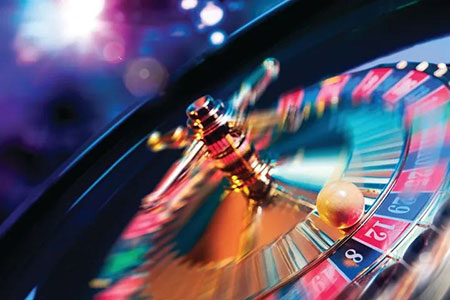 Then comes one of the most deceptively appealing wagers on the American layout: the Five Number bet, covering 0, 00, 1, 2 and 3. It sounds like a bigger opportunity because you’re covering five numbers, but it’s actually the worst standard wager on the double- zero wheel, with a 7.89 percent house edge.
That’s the lesson in a nutshell: more numbers covered doesn’t necessarily mean a better bet.
And then we get to the games themselves.
Some of the most enticing names in the casino are attached to proprietary or specialty games: Caribbean Stud. Let It Ride. Casino War. Red Dog. They sound adventurous, mysterious or downright dangerous.
Compare those with craps, 21 and blackjack.
Craps sounds like something you might scrape off your shoe. Twenty-one sounds like a birthday. And blackjack sounds like an old-fashioned weapon.
Yet blackjack and the basic bets at craps are among the casino’s more mathematically attractive choices.
So why do the games, strategies and bets with the highest house edges so often have the most alluring names?
Because excitement sells.
Casino players are looking for action. A colorful name makes a wager feel special. A dramatic name makes a potential payout seem bigger. And a player standing at a craps table shouting, “Give me a horn!” or “Hard eight!” certainly feels more involved than someone quietly placing an Odds bet.
If you’ve played craps, you’ve probably seen the performance. The player spins the chip, flips it into the air and calls out the bet with a flourish. The wager may carry a hefty house edge, but for that moment, it feels like the center of the action.
And that’s perfectly understandable. Gambling is supposed to be entertaining.
But savvy casino players know that the name on the felt doesn’t determine the value of the wager. The math does.
The casino can call a bet Fire, Lucky, Perfect, Royal or Super Seven. It can give a side bet a name that sounds like a million-dollar opportunity. None of that changes its house edge. So don’t be seduced by the vocabulary.
Banker may sound boring. Pass Line may sound like something from a driver’s test. Odds may put you to sleep. Basic Strategy sounds like homework.
But boring doesn’t mean bad.
In fact, when it comes to casino gambling, boring can be beautiful— and winning never gets boring.
Frank Scoblete’s website is www.frankscoblete.com. His books are available from Amazon.com, Barnes and Noble, Kindle, e-books, libraries and bookstores.
