

NO SKILL IN PENNSYLVANIA
The Pennsylvania Supreme Court has held that “skill games” are slot machines, subject to the same rules as casino slots
By Frank Legato
Last month in this space, I highlighted the situation involving so-called skill games—slot- like machines that their operators and manufacturers claim are legal because a dubious skill element can help players win. A Missouri judge ruled in February that the games, widespread in convenience stores, bars, fraternal organizations and locations as diverse as laundromats, are illegal slot machines, in violation of the regulations governing casino slots.
In May, a bill to legalize and regulate the games died in the Senate, which means the attorney general’s order for operators to remove the games or face sanctions is still in force.
It was a major win for Missouri casinos, and a major loss for Torch Electronics, supplier of the games.
In June, it was Pennsylvania’s turn for a win.
Pennsylvania is arguably the epicenter of the skill games phenomenon. The games started appearing in the mid 2010s and proliferated in retail locations around the state. In 2021, the American Gaming Association (AGA) and the Association of Gaming Equipment Manufacturers (AGEM) announced a campaign to have the games banned.
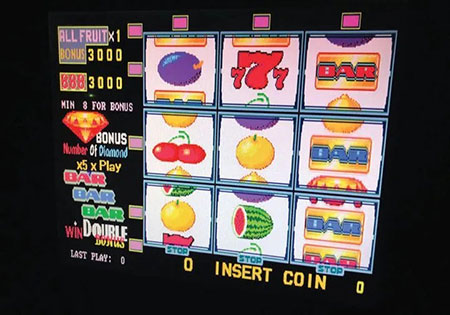
The Pennsylvania casino operators have been unanimous in calling for the removal of the games, at one point even filing suit seeking an order to suspend the 54 percent tax they pay on slot revenues in light of the untaxed competition.
The games, meanwhile, have continued to proliferate in the state. Official estimates number the games at 70,000 across the state, but some private estimates have them at closer to 90,000, raking in untaxed revenue that has fueled a lobbying campaign by the manufacturer of what are branded “Pennsylvania Skill” machines, Georgia-based Pace- OMatic.
Pace-O-Matic has based its public position that the games are legal on two early court cases involving its company. The first was a 2019 case in which the company joined with a bar owner in a suit seeking return of property after police seized Pennsylvania Skill machines as illegal gaming machines.
The Dauphin County Court of Common Pleas and Commonwealth Court both ruled in that case that the games are skill-based and therefore not subject to regulations for slot machines.
In the other case, Pace-O-Matic sued the state, seeking a judgment on whether the games are legal. Commonwealth Court ruled the state’s existing law regulating gambling doesn’t apply to skill games.
The state attorney general appealed both cases to the state Supreme Court, and last month, the justices issued a single ruling, holding for the state in both cases and declaring that Pennsylvania Skill machines are illegal slot machines under state law.
In both cases, a majority of state Supreme Court justices said Commonwealth Court’s interpretation of statutes was “deeply flawed,” and the court was “incorrect on both points.”
A skill game, they wrote, is a slot machine “several times over” because it meets the general definition of slot machine in state statute, and because it meets the ordinary English definition of “a coin-operated gambling machine that pays off according to the matching of symbols on wheels spun by a handle.”
The skill element, they wrote, does not make the games legal. The justices said the language of the gaming statute clearly applies to the skill games. A definition of games including skill elements was added to the Gaming Act’s definition of a slot machine in 2017. The Supreme Court’s decision was “premised upon the court’s misreading of fundamental aspects of the statutory scheme,” justices wrote.
The decision grants a 120-day delay in state enforcement of the ruling, to allow lawmakers time to pass a law to regulate the games under the state Gaming Act. “Naturally, because all that follows is a consequence of statutory law, our General Assembly also remains free at any time to take whatever legislative action it may deem appropriate,” they wrote, adding that their decision “does not constitute an endorsement of, any particular policy view concerning the proliferation of ‘skill games’ throughout our Commonwealth.”
Two bills in the Pennsylvania Legislature to legalize and regulate skill games died last year. One, filed by skill game champion Senator Gene Law, would have implemented age restrictions and placed regulation of the games under the state Department of Revenue, which oversees the Pennsylvania Lottery. Yaw’s proposal would limit skill games to five per location, with a state revenue tax of 16 percent.
Considering the high court’s decision, an alternative bill filed last year by Senator Chris Gebhard is the more likely legislation to pass judicial muster. It would apply the current rules followed for truck-stop VGTs, with a tax rate of 35 percent and under the jurisdiction of the Pennsylvania Gaming Control Board (PGCB), just like casino slots.
Regardless of any legislation that may pass, Pennsylvania Skill games will now have to follow the same rules that apply to casino slots and VGTs. Manufacturers and operators will be required to become licensed by the PGCB.
Manufacturers like Pace-O-Matic will have to be vetted under the same background scrutiny as the major slot manufacturers. The machines will have to be examined by the state slot lab for fairness, theoretical return and responsible gaming controls, and approved by the lab. They will only be permitted in age-restricted areas.
What’s more, if a VGT model is adopted, it will create a new market for the major slot manufacturers—the likes of Pace-O-Matic will now have to compete with the likes of Aristocrat, IGT and Light & Wonder.
Good luck with that.
