

THE ‘SKILL’ BATTLE
Federal judge says no to Missouri “skill games”
By Frank Legato
A few weeks ago, a federal judge ruled that slot-like “skill games” that have operated for years in bars, restaurants and convenience stores across Missouri are illegal gaming devices under state law.
It’s a victory for the legitimate casino industry in Missouri, not to mention the American Gaming Association and the Association of Gaming Equipment Manufacturers, which have been fighting to ban the so-called skill games in several states.
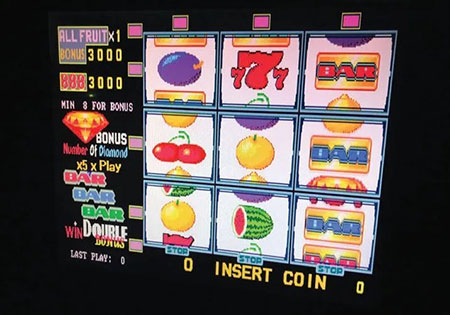
The manufacturers of these games—in Missouri, it’s Torch Electronics; in Pennsylvania and other states, Pace-O-Matic—claim they are legal because some element of “skill” contributes to winning on the games. Normally, the “skill” involved is dubious, like being shown a flash of the next result before deciding on whether to make a wager. Often, there is an option to disable the skill feature, which means the games proceed exactly like a slot machine.
Casino operators and manufacturers object to the games because their manufacturers don’t go through rigorous licensing procedures— nor do the operators, often a mom-and- pop business. They pay no taxes to the state, where casinos pay as much as 50 percent or more of their slot profits to government coffers. There are no safeguards against problem gambling, or underage gambling.
In short, the “skill games” are exploiting a gray area in the law to rake in gambling profits without having to bother with licensing, player protections or state taxes.
Pennsylvania, which is the epicenter of the skill-game phenomenon, has not determined what to do with an estimated 80,000- plus skill games located in retail locations around the state. State police have made seizures of the games, but in at least two cases, local judges came down on the side of the manufacturer, Pace-O-Matic. The Pennsylvania attorney general has appealed one of those cases to the state Supreme Court, asking that all the games be banned as illegal, while state lawmakers consider competing legislation to legalize, regulate and tax the games.
One bill, introduced by a state senator who has received much in the way of campaign contributions from Pace-O-Matic, would impose licensing rules and age restrictions, but would tax the games at 14 percent of revenues. The other, favored by the governor, would require the same licensing regimen as the current casinos, along with a tax much closer to the effective 54 percent of slot revenues paid by casinos.
Wyoming, on the other hand, legalized the “Cowboy Skill” games already operating in the state and imposed a 20 percent tax rate, which the state is proposing to increase to 25 percent. Compacted Indian casinos in the state pay a 10 percent revenue tax on slots. Virginia passed a law banning skill games, but operators and skill-game manufacturers are fighting to overturn the ban as lawmakers consider legalization and regulation.
In the Missouri case, the decision by U.S. District Judge John Ross lands as lawmakers debate whether to legalize the skill games as in Wyoming, and as the attorney general’s office has vowed to pull the plug and ban them, as in Pennsylvania.
Ross’ ruling references an October federal jury verdict ordering Torch Electronics to pay $500,000 to a competitor who lost money because of Torch’s repeated claims their games are legal.
Ross pointed to that jury’s conclusions in writing that Torch’s machines “meet the statutory definition of ‘gambling device’ and are therefore illegal under Missouri law when played outside a licensed casino.”
Torch Electronics has vowed to appeal, and the supplier has deep pockets. Over the past year, Torch donated $650,000 to political action committees run by its lobbyist, former House Speaker Steve Tilley. Warrenton Oil, whose convenience stores host many Torch machines, contributed another $135,000 to those PACs.
Meanwhile, Missouri lawmakers are considering a bill that would replace the current skill games with a state-run video lottery system. Under the bill, which has received preliminary approval in the House, operators of unregulated skill games would have one year to shut down those games and replace them with licensed video slot games.
The Missouri Lottery would have authority to license video games for installation in retail locations across the state. The licensed machines would have to pay out at least 80 percent of the money wagered back to players, and about one-third of the profits would be dedicated to state education programs.
The bill would also impose a 3 percent tax on video lottery profits to aid local governments and would increase the fee casinos pay for each patron who enters the gaming floor from $2 to $4.
It is not clear whether Torch would submit its games for approval under the new video lottery act, but presumably, the legislation would open the door to the traditional slot manufacturers to submit their games for licensing.
As the bill stands, it would establish the lottery as, in the least, unfair competition to the casinos in establishing a 3 percent revenue tax on the games. Missouri casinos pay a 21 percent tax on their slot machine revenue. This tax is part of the state’s overall gaming tax structure, which also includes different rates for other forms of gambling.
Operators in states like Pennsylvania have stated that they support banning the skill games, but if they are to be licensed and taxed, that tax rate should mirror the slot tax paid by licensed casinos. The operators even have a lawsuit pending in which they seek to abolish their own slot tax should the untaxed skill games continue to operate.
The key phrase coming from these operators is that all gaming should be conducted on a “level playing field.” Should Missouri pass the video lottery bill, that means taxing the games at 21 percent, not 3 percent.
Stay tuned.
