

Ontario’s iGaming Milestones: The Launches, Laws and Changes That Defined the Market
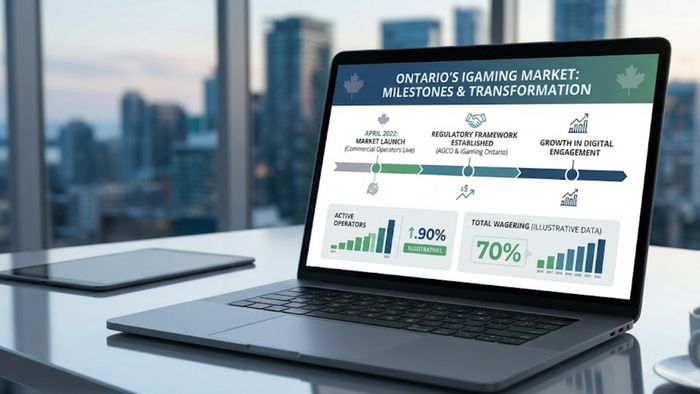
The Canadian regulated online gambling market is now one of the largest in North America – mostly powered by Ontario, where the market spend rivals that in most major US states. In 2025 operators made $2.7 billion in revenues, and since opening in 2022 they have paid some $2 billion in taxes (revenue sharing) to the province.
This article will look at some key moments along the way, that got the market to the multi-billion-dollar phase that it is in currently – plus some recent developments that may hint at its future.
The Bill That Came Before the Launch
The first concrete moment on the road to Ontario’s legal online gambling sector was Bill C-218 (the Safe and Regulated Sports Betting Act), which passed the Canadian Parliament in June 2021. That gave provinces the green light to open their own regulated local markets and Ontario took just months to get the ball rolling.
The stated aim of the market was to channel money that was then being gambled at offshore casinos with no local regulation into taxable and more controllable options licensed by the new regulatory bodies.
Market Launch Day
Ontario became the first province to launch an open but locally regulated and licensed online gambling market in April 2022. Twelve operators opened on launch day, and by the end of the year some 39 brands were in operation. The launch was a test for the capabilities of the dual regulatory system between iGaming Ontario and Alcohol and Gaming Commission of Ontario.
The opening year saw roughly $1 billion in revenues for operators on some $30 billion in wagers. Which was beyond expectations of many in the provincial government and in the business.
Interestingly, sports betting was the most popular sector for year one. However, by year two online casinos were the growth part of the business.
First Full Year in 2023
Without a full year to gauge, and a market that started not completely formed, 2023 was always going to be the year that defined the sector and its potential.
When the numbers came in via iGaming Ontario’s 2023-24 annual report, they revealed $1.58 billion in revenues for operators, on $63 billion wagered. Initial employment statistics were also strong, with reports suggesting the business had created or supported some 16,000 new jobs across the province.
By the end of this first year, the province’s market had hit or nearly hit many of the five year targets initially set by the government after hiring international consultancy firm Deloitte to analyse potential. It continued to hit those targets, with competition and spend increasing over the following years.
One way of seeing this intense competition among numerous brands for custom in Ontario today is to look at an online resource actually used by gamblers. Casino.org has reviewed online casinos in Ontario since the market launch, and the breadth and depth of information it collates shows just how much detail players want when looking for a casino in this highly competitive market.
Bettors analyze a whole host of features to see which operators stand out, and as well as packing in features and bonuses, operators also spend big on marketing.
Athlete Ads Banned, Province-Wide Exclusion Launched
Some would argue, they spent too much. Despite all this growth, and revenue for the province’s coffers, not everyone was happy with the increased amount of gambling adverts across the province. This led the regulators to make some changes.
In 2024, Ontario banned current or former professional athletes from appearing in adverts or sponsor segments by sportsbooks or online casinos. It also narrowed down a rule, clarifying that celebrities who have any appeal to minors rather than some can’t be used in gambling ads.
The number of gambling ads has since dropped considerably, peaking in 2023, particularly in regards to high visibility public spaces across the province.
91% of Gambling Captured from Offshore Sites
By 2025 the Ontario market had 1.27 million active players across 84 gambling sites.
That number, regulators were happy to announce in mid 2026, accounted for 91% of all online gambling activity in the province. In terms of converting players from offshore sites to locally taxable and regulated sites, that is a huge success.
That 90% of millions of players has brought even more operators into the market looking for a slice of the pie.
One change that many were calling for at this time, but did not happen until 2026, was a province-wide self exclusion system.
This is a responsible gambling tool available in many regulated markets worldwide, that allows players to exclude themselves for a time (or permanently) from any casinos licensed in the jurisdiction. Ontario launched BetGuard in May 2026, and it has now rolled out across the province.
Alberta Follows Suit in 2026
The biggest mark of Ontario’s success however, actually comes from another Canadian province. Alberta launched its own market under the Ontario model in June 2026, after a year or so of preparations.
Much like in Ontario, Alberta’s regulators said capturing the offshore market was also key, with gambling occurring in the province already – just not at taxable, licensed sites. Early signs are the new market could be already exceeding expectations itself.
The views and opinions expressed by the writers and columnists of Casino Player, Strictly Slots, and Casinocenter.com do not necessarily reflect those of the magazine’s management. All content is intended solely for entertainment and informational purposes. Gambling may be illegal in some jurisdictions—it is the responsibility of each visitor to check and comply with local laws before participating in online gaming. Always read the terms and conditions, and gamble responsibly.
