
How Scandinavian Online Casinos Differ From the American Land-Based Experience
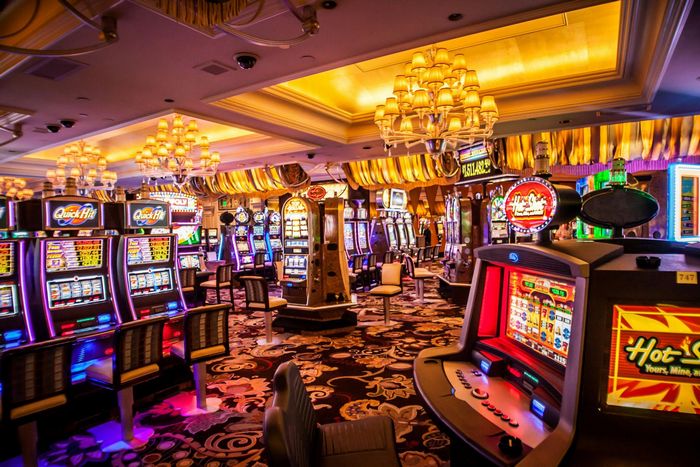
Walk onto any casino floor in Las Vegas or Atlantic City and the experience is built around presence — the noise, the free drinks circulating on trays, the physical weight of chips changing hands, comps accumulating on a player’s card in real time. Scandinavian online casino culture, centered around platforms like nyestecasino.com, runs on almost the opposite set of assumptions, and understanding why reveals as much about regulatory history as it does about culture.
Two Regulatory Philosophies, Built From Different Starting Points
American land-based gambling grew up jurisdiction by jurisdiction, starting with Nevada’s 1931 legalization and expanding through a patchwork of state commissions, tribal gaming compacts, and, more recently, individual state approvals for online platforms following the 2018 repeal of PASPA. Every state effectively runs its own gambling policy, which is why a player crossing from Nevada into California encounters a completely different legal landscape despite driving for ten minutes.
Scandinavian markets took a different path entirely. Norway maintains a state monopoly through Norsk Tipping, meaning there’s technically no domestically licensed private online casino at all — Norwegian players who gamble online do so through foreign-licensed operators, a practice that isn’t illegal for the player even though the operators themselves fall outside Norwegian jurisdiction. Sweden deregulated in 2019, opening its market to competing licensed operators under Spelinspektionen, closer in spirit to how individual US states now license online platforms, but still operating under a single national framework rather than a state-by-state patchwork.
Verification: Minutes Online Versus Standing at the Cage
Anyone who’s signed up for a land-based casino’s players club card knows the drill: a physical ID, a short form, sometimes a photo taken at the desk. Online account verification in the US casino market follows a similar logic translated to digital form — uploaded ID documents, a waiting period for manual review, sometimes a few business days before full account features unlock.
Scandinavian platforms operate on a fundamentally faster verification layer, built around BankID, a national digital identity system used across Norway and Sweden for everything from banking to government services, not just gambling. A new account can be verified in under a minute because BankID already confirms identity at a level most American verification systems have to build manually and separately for each operator. That single piece of infrastructure explains a lot of why the Nordic online experience feels instant in a way the American equivalent generally doesn’t.
Payments: Instant Bank Transfer Versus Cash, Chips, and Cards
Land-based American casinos remain fundamentally cash-and-chip economies, even as cashless gaming systems slowly roll out at individual properties. Online US platforms have layered credit cards, PayPal, and increasingly prepaid options on top of that legacy system.
Scandinavian online casinos lean almost entirely on instant bank transfer services like Trustly and Zimpler, which pull directly from a player’s bank account with the same BankID authentication used for verification. Deposits and withdrawals both settle in seconds rather than the multi-day processing common with American online casino withdrawals, largely because the underlying banking infrastructure in Norway and Sweden was built around instant transfers well before online gambling made use of it.
Comps, Loyalty, and the Absence of a Casino Floor
The land-based comp system — free rooms, meals, show tickets, all tied to tracked play through a physical card inserted into a slot machine — has no clean equivalent in the Scandinavian online market, mostly because there’s no physical floor generating that kind of data in the first place. Nordic operators run loyalty programs, but they tend toward straightforward cashback percentages and deposit-based tiers rather than the elaborate comp ecosystems built around decades of physical casino resort economics.
That absence isn’t a shortcoming exactly — it reflects a genuinely different product. A Scandinavian platform is optimized purely around the game itself and the transaction wrapped around it, without the resort, dining, and entertainment ecosystem that defines a property like a Las Vegas Strip casino.
Self-Exclusion: One National System Versus Fifty State Ones
Sweden’s Spelpaus lets a player self-exclude from every Swedish-licensed operator simultaneously with one registration, a single national off-switch. The US equivalent is fragmented by design: each state maintains its own self-exclusion list, and a player excluded in New Jersey isn’t automatically excluded from a Michigan or Pennsylvania platform, since these systems were built independently by separate state gaming commissions rather than any coordinated federal framework.
Neither system is complete — Sweden’s Spelpaus doesn’t reach foreign-licensed operators outside its jurisdiction, the same gap that affects Norwegian players relying on international sites — but the difference in structure says a lot about the two regulatory philosophies at a glance.
| Scandinavian Online Model | American Land-Based/Online Model | |
| Regulatory structure | National monopoly (Norway) or single licensing body (Sweden) | State-by-state commissions and tribal compacts |
| Identity verification | BankID, near-instant | Document upload, multi-day review common |
| Payments | Instant bank transfer (Trustly, Zimpler) | Cash/chips on-property; cards and e-wallets online |
| Loyalty structure | Cashback and deposit tiers | Comp systems tied to tracked physical play |
| Self-exclusion | Single national system | Separate list per state |
Tax Treatment Adds Another Layer of Difference
Norwegian and Swedish players generally don’t pay tax on gambling winnings from EU/EEA-licensed operators, since the operator itself carries the tax obligation under most Nordic frameworks rather than the individual player. American gamblers face the opposite arrangement: gambling winnings are taxable income under US federal law regardless of the amount, with casinos required to issue a W-2G form for wins above certain thresholds depending on the game. That single difference changes the practical arithmetic of a big win in ways that have nothing to do with the platform itself and everything to do with which country’s tax code applies.
What American Players Actually Notice First
For an American land-based casino regular trying a Scandinavian-style platform for the first time, the most immediately obvious difference usually isn’t the game selection — slots and table games translate across markets easily enough — it’s the sheer speed of account setup and cashout. A process that takes an American online player several days of document review and waiting for withdrawal processing happens for a Nordic-style account in minutes, end to end. For readers curious about how Nordic-focused comparison platforms actually evaluate operators worth featuring, Casino Player’s own look at Finland’s leading casino comparison site breaks down the hands-on testing methodology that separates a credible Nordic review site from one running on promotional copy alone — a useful comparison point for anyone used to how US review sites typically operate.
The Bigger Picture
Neither system is objectively better designed than the other — they’re solutions built for genuinely different regulatory environments, banking infrastructure, and cultural relationships to gambling as entertainment. The American land-based model optimizes for an entire destination experience built around physical presence; the Scandinavian online model optimizes for speed, simplicity, and a national identity infrastructure that happens to make gambling account verification almost incidental to the broader system it’s built on. For American players curious about what a fundamentally different regulatory philosophy looks like in practice, the Nordic model offers a genuinely instructive contrast rather than simply a faster version of the same thing.
The views and opinions expressed by the writers and columnists of Casino Player, Strictly Slots, and Casinocenter.com do not necessarily reflect those of the magazine’s management. All content is intended solely for entertainment and informational purposes. Gambling may be illegal in some jurisdictions—it is the responsibility of each visitor to check and comply with local laws before participating in online gaming. Always read the terms and conditions, and gamble responsibly.
