

DON’T BE A KNOW-IT-ALL
Think you’ve got the game figured out? A closer look at table basic strategy, and why less talk often means more respect
By Al O’Grady
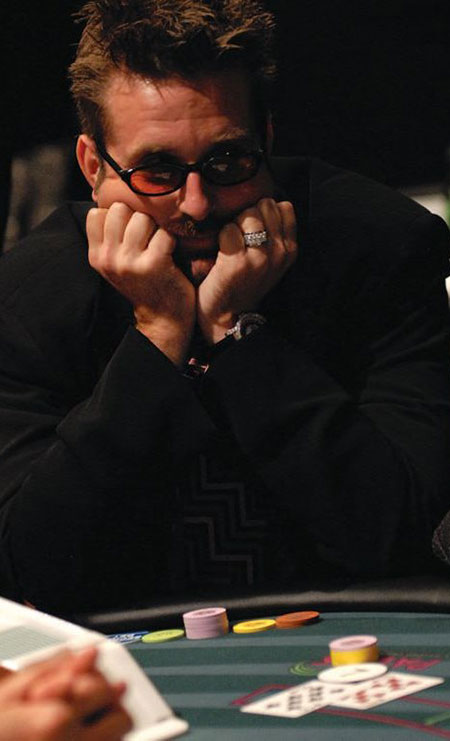 Within the first five minutes at the table, the tells are already there. Not the cinematic kind—the subtle flick of a wrist or a nervous glance— but something far more revealing: how you buy in, how you handle your chips, and how you play your hand. It doesn’t take long to separate the seasoned players from the casual ones, and the casual ones from those who are simply out of their depth.
The clues start the moment cash hits the felt. A $2,500 buy-in at a $25 table, stacked neatly in $100 bills, signals confidence and experience. A $500 buy-in with a mix of $50s and $100s suggests a solid, competent player who knows their way around the game. But when someone buys in for $50 with crumpled $5s and $10s,it’s often a sign they’re playing a game they’re not quite ready for.
Of course, the money is only part of the story. What really defines a player is what happens after the cards are dealt. Do they double down and split when the math calls for it? Do they hesitate on a 15 against a dealer’s 6, or confidently make the correct move? Can they recognize the moment for a more advanced play, like doubling a soft 18 against a 5? From buy-in to behavior, every detail paints a clear picture—and for those who know what to look for, that picture comes into focus almost instantly.
Then there’s a very specific breed of player you’ll find at almost every table—the “know-it-all.” Sometimes it’s a genuinely experienced player. Other times, it’s someone who knows just enough to be dangerous and believes they know far more. Either way, they tend to be the loudest voice in the game—quick to critique, eager to instruct, and all too ready to tell the dealer how things should be done. My personal favorite? The player who tries to outpace the dealer on blackjack math.
If any of this sounds familiar, here’s some friendly advice: stop. It rarely comes across the way you think it does—and more often than not, it makes you look worse, not better.
When another player makes a basic strategy mistake, resist the urge to pounce. It’s their money, their hand, and their decision. If you feel compelled to say something, keep it respectful and constructive. A quiet explanation of the correct play—and why it matters—will go much further than public criticism. Most inexperienced players are open to learning, but no one responds well to being talked down to. And if they continue to play their own way? Aside from finding another table, there’s nothing you can do.
It’s also worth remembering that basic strategy isn’t a guarantee—it’s a probability. You can make every correct move and still lose, just as someone else can play everything wrong and walk away a winner. Players love to recall the time someone “ruined the table” with a bad decision, but they conveniently forget the times when that same kind of mistake worked in everyone’s favor. The game doesn’t keep score the way people think it does.
Here is another reason you should not act like a know-it-all when it comes to basic strategy: I guarantee you that the so-called expert will make a strategy mistake as well. I love pointing out those mistakes to them. They stick on a 16 and I have a 7 showing, and I pull a 4 and then a 10 and everyone loses. Had the so-called expert played perfectly, the opposite would have been true. Depending on how condescending the so-called expert is to the amateur is directly proportional to me giving him advice.
And now for the climax for dealing with the know-it-alls. For some reason, they need to show everyone how smart they are calculating 3:2 odds on blackjack payouts and that they can do it faster and more accurately than the dealer. This is low-hanging fruit for me. They will announce that a $75 blackjack pays $112.50,a $90 blackjack pays $135, and a $150 blackjack pays $225.The know-it-all thinks he is so much smarter than everyone at the table, including the dealer. News flash— every dealer can do these in his sleep. Blackjack payouts are part of the training program for every casino, and we have shortcuts and tricks for the bigger bets that will dazzle most.
Here is a math test for you: How quickly can you calculate 3:2 odds on the following bets?
- $275
- $325
- $462.50
These were actual bets and the know-it-all did not have a clue. Take your time and try to do the calculation in your head. If you can do it in your head, how long did it take you? If you are intimidated by this, do not worry about it, that is why the casino pays us the big bucks. I was able to solve all of them in 3 seconds or less. I do not want to sound like I am bragging but I will put my math ability against anyone’s. That does not mean I am better than everyone, but I will put math ability in the top 5 percentile.
Here is a dealer’s secret for making these calculations: Break it down to two numbers. For question 1, a $275 wager. That is the same as 200 + 75.A $200 wager pays $300 and a $75 wager pays $112.50; 300 +112.50 = $412.50. Question 2, a $325 bet getting a blackjack. Break it down to two numbers (300 +25).A $300 wager pays $450, a $25 wager pays $37.50; (450+37.50=$487.50).The last one was my favourite one, a $462.50 blackjack wager. Break it down to two or even three numbers (400+60+2); the 0.50 we will address. The result: 400 pays 600, 60 pays 90, 2 pays 3 and the 0.50 pays $1.The result: 600+90+3+1 equals $694. So if you find yourself leaning into that know-it-all role, pull it back a bit. Keep the commentary to a minimum, respect how others choose to play, and let the dealer handle the mechanics of the game. You focus on your cards, they’ll focus on theirs, and the table will be a much better place for it.
Good luck out there—and don’t forget to tip your dealer.
Al O’Grady has been a blackjack dealer for over seven years. He is a freelance writer with an economics degree and is currently pursuing a degree in mathematics.
