

The Art of Casino Tipping
A little generosity can go a long way. Here’s our updated guide to tipping the people who help make your casino visit more enjoyable
 If there’s one thing that can sometimes be more confusing than figuring out a slot machine’s bonus round, it’s figuring out whom you should tip at a casino—and how much.
We all know the drill at a restaurant. Good service generally means leaving a gratuity, with 20% now a common benchmark for good service. But a casino is a giant service operation, too, with plenty of employees working behind the scenes—and right in front of you—to make your visit more enjoyable.
So who deserves a little extra appreciation? And what’s considered appropriate these days? We’ve put together a casino tipping guide to help take the guesswork out of it.
Comped Meals: Tip on the Full Price
Here’s an easy one to forget: A comped meal doesn’t mean a comped tip. If the casino picks up your dinner tab, calculate your tip based on the meal’s full value before the comp or discount. The same goes for a 2-for-1 offer, dining coupon or other promotion.
If your meal would have cost $100 before the casino picked up the tab, your server should still receive a tip based on that $100—not the zero-dollar bill you see at the end.
It’s one of the simplest ways to show your appreciation for good service.
Restaurant Hosts & Lounge Staff: When a Little Extra Goes a Long Way
The host or hostess at a casino restaurant is usually not someone you’re expected to tip simply for seating you. But if they go beyond the basics—finding you a table during a busy period, accommodating a special seating request, helping with a difficult reservation or otherwise providing exceptional service—a small gratuity can be appropriate.
For a routine seating, there’s no need to tip. For special assistance, $5 to $10 is a reasonable gesture, with more for truly exceptional help. Just remember that a tip should be a thank-you for service—not a way to buy your way to the front of the line.
Casino lounges and clubs can be a little different, particularly when you’re receiving table or bottle service. If you’re ordering drinks at the bar, $1 to $2 per drink is a good starting point, with more for elaborate cocktails or especially attentive service.
If you’re seated at a VIP table or receiving bottle service, check your bill before reaching for your wallet. A 15% to 20% gratuity is common when it hasn’t already been included, but many clubs automatically add a service charge. You don’t want to accidentally tip twice.
The same goes for complimentary drinks or VIP treatment. Complimentary may mean the casino is picking up the tab, but it doesn’t mean the service is tip-free. If a cocktail server or lounge staff member is taking care of you throughout the evening, a few dollars is a nice way to show your appreciation.
 Hotel Staff: Don’t Forget the People Who Keep Things Moving
The people who handle your luggage, car and room can make a big difference in your stay—and they’re easy to overlook.
For bell staff, $2 to $3 per bag is a good current guideline, with a minimum of about $5 for a typical arrival or departure. Add more for especially heavy bags, multiple trips or extra assistance.
Housekeeping deserves attention, too. A $5-per-night tip is a reasonable starting point, with more for a larger room, a longer stay or particularly attentive service. Leave the tip daily rather than waiting until checkout, since the person cleaning your room may not be the same person every day. And don’t assume that a resort fee includes a housekeeping gratuity—it generally doesn’t.
Valet parking is another opportunity to say thanks. A $3 to $5 tip when you drop off your car and another $3 to $5 when it’s returned is a good guideline. If the attendant goes above and beyond—perhaps having your car ready quickly when you’re in a hurry, helping with luggage or accommodating a special request—feel free to add a little more.
Taking a hotel or airport shuttle? $2 to $5 for a typical ride is reasonable, with more if you have lots of luggage or receive extra assistance.
And then there’s the concierge. There’s no set percentage here. A $5 to $20 tip is appropriate for helpful service, depending on the request. If someone simply gives you directions, that’s one thing. If they manage to secure a hard-to-get restaurant reservation, arrange transportation or pull together a complicated outing, that’s another.
Casino Dealers: A Little Something for the Person Dealing the Cards
If you’re playing a table game and having a good time, consider tipping the dealer. You’re never obligated to tip, but it’s a nice way to recognize good service—and it’s a long-standing casino tradition.
How much? There’s no official rule, but your wager size, length of play and how well you’re doing can help determine what feels appropriate.
At lower-stakes tables, where you’re betting around $5 to $15 a hand, dropping a $1 chip for the dealer every few winning hands is a reasonable guideline. At higher-stakes tables, with $25 or more on the layout, $5 tips are more common, particularly after a nice win. And if you score a big win on a side bet, tipping a few percent of that particular win can be a generous gesture.
There are two basic ways to tip. You can hand the dealer a chip and tell them it’s for them; or, at most table games, you can make a wager for the dealer. Place the dealer’s chip in the designated betting area in front of your own wager and let the dealer know it’s a bet for them. If their bet wins, their tip wins, too. Just remember that a dealer bet is an actual wager, so it can lose just like yours.
One important rule: Never toss chips directly to a dealer while a hand is in progress. Follow the casino’s procedure and let the dealer handle the chips appropriately.
And remember, tipping is voluntary. You don’t need to tip every hand, and you certainly shouldn’t feel pressured to tip money you can’t afford. If you’re enjoying the dealer’s personality, having a particularly good session or simply appreciate good service, a tip is a nice way to say thanks.
Slot Attendants: When Your Machine Says, “Jackpot!”
Hit a jackpot that requires a hand-pay? Congratulations! Once the excitement settles in, you may also wonder whether you should tip the slot attendant who comes over to verify the win, handle the paperwork and deliver your payout.
There’s no official rule or required percentage for tipping a slot attendant, but a tip is a nice way to recognize good, efficient service. As a general guideline, consider $20 for a smaller jackpot, $40 to $50 for a mid-size win and around $100 for a jackpot of $10,000 or more.
Some players use roughly 1% of the jackpot as a starting point, although that certainly isn’t a hard-and-fast rule. A $1,200 to $2,000 jackpot might warrant a $20 tip, while a $4,000 to $5,000 win could call for $40 to $50. If you hit a $10,000-plus jackpot, $100 is a generous gesture.
Of course, the amount is entirely up to you. Consider the size of the jackpot, the level of service and your own comfort level. If the attendant is especially helpful, gets everything processed quickly or goes the extra mile, you may want to give a little more.
And remember, you’re tipping for the service—not the jackpot itself. The attendant didn’t make your machine hit, and they can’t control how much you won. They’re simply there to make the payout process go smoothly.
 Beverage Servers: Don’t Let the Free Drink Fool You
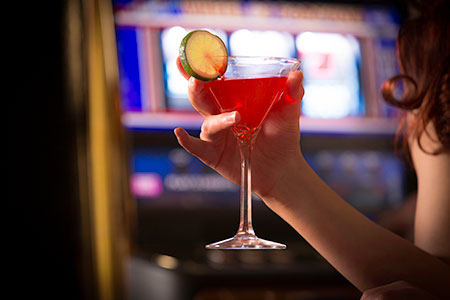
If you’re lucky enough to receive complimentary drinks while playing, don’t forget the person bringing them to you.
A $1 to $2 tip per drink is a common starting point, with more for attentive or frequent service. If you’re ordering several drinks, you can also tip appropriately for the overall level of service rather than treating every drink as a separate transaction.
And here’s an important casino courtesy: Don’t order a drink and then disappear before it arrives. Your server has spent time preparing and delivering that order. Even if the drink itself is complimentary, their service isn’t.
Casino Hosts: Check the Rules First
Casino hosts are a different story. Because they work for the casino and may have a role in determining comps and other benefits, properties often have specific rules governing gratuities and gifts.
Cash tips may be prohibited or restricted, and gift policies can vary from one casino to another. If you want to thank a host who has gone out of their way for you, check the property’s policy first. A sincere thank-you note or an approved modest gift may be a better choice than simply slipping someone cash.
And remember, your host doesn’t control the outcome of your gambling. A gift should be a thank-you—not an expectation of future comps.
The Bottom Line on Tipping
Ultimately, tipping is personal. You’re not required to reward poor service, and you shouldn’t feel pressured to tip beyond your means simply because you’re in a casino.
But when someone makes your experience easier, more enjoyable or simply goes the extra mile, a few dollars and a sincere “thank you” can go a long way.
Think of tipping as another part of your casino entertainment budget. Set aside what you’re comfortable spending on gratuities before you hit the casino floor, just as you set your gambling bankroll.
After all, you’re there to have fun. You shouldn’t have to gamble with your tipping budget, too.
